


To eavesdrop means to listen in, to overhear, to catch what was not intended to be heard. Eavesdropping is often associated with intrusion. A microphone left listening becomes an instrument of surveillance. A device that is always listening raises suspicion about what is being heard, remembered, or passed along.
There are, however, other ways to think about listening. Grass whispers in the wind. The rustle of leaves registers the movement of air. A field of reeds bends with forces that cannot be otherwise seen. In each case, the environment listens by moving. Listening becomes an act of connection.
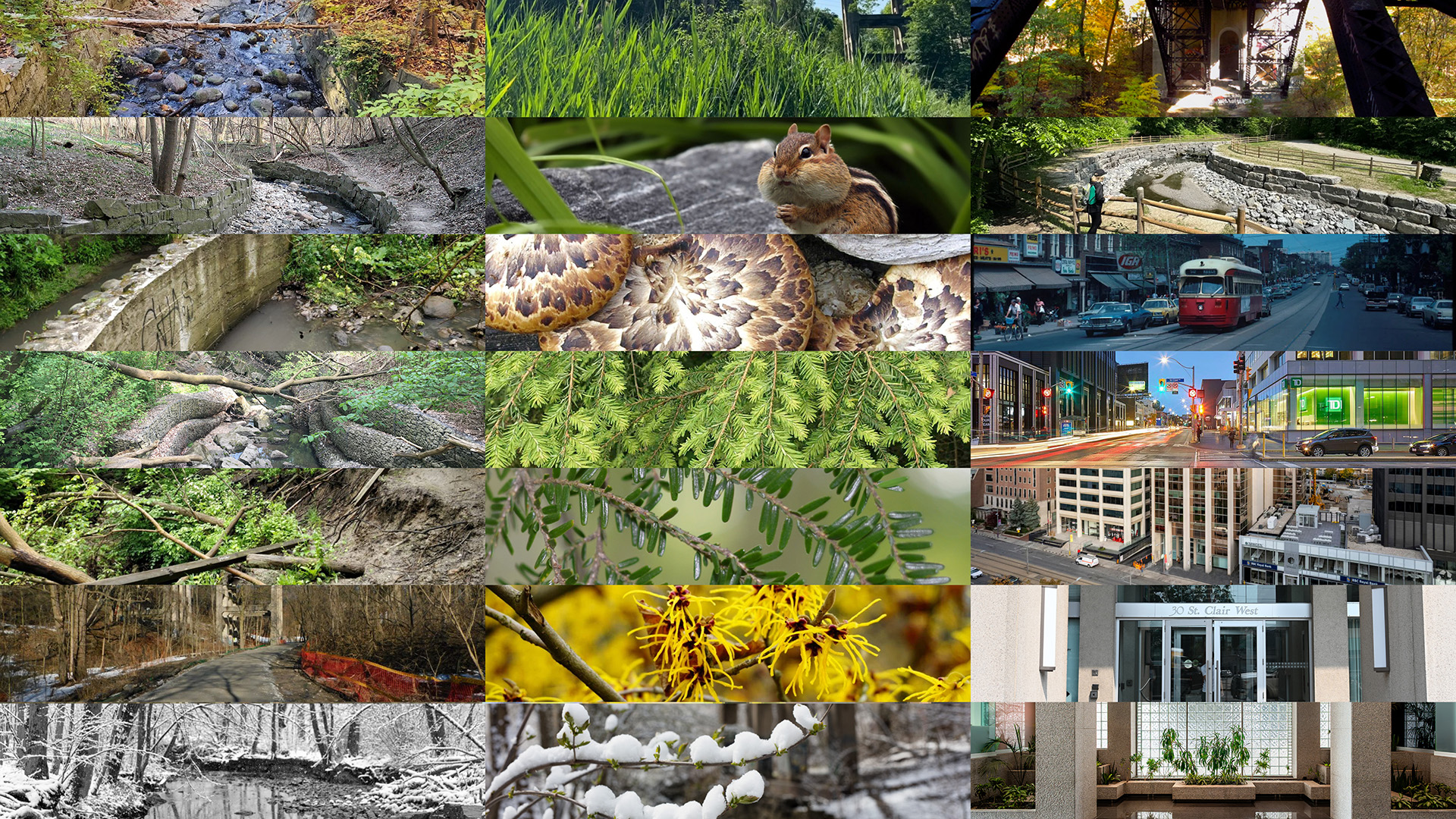
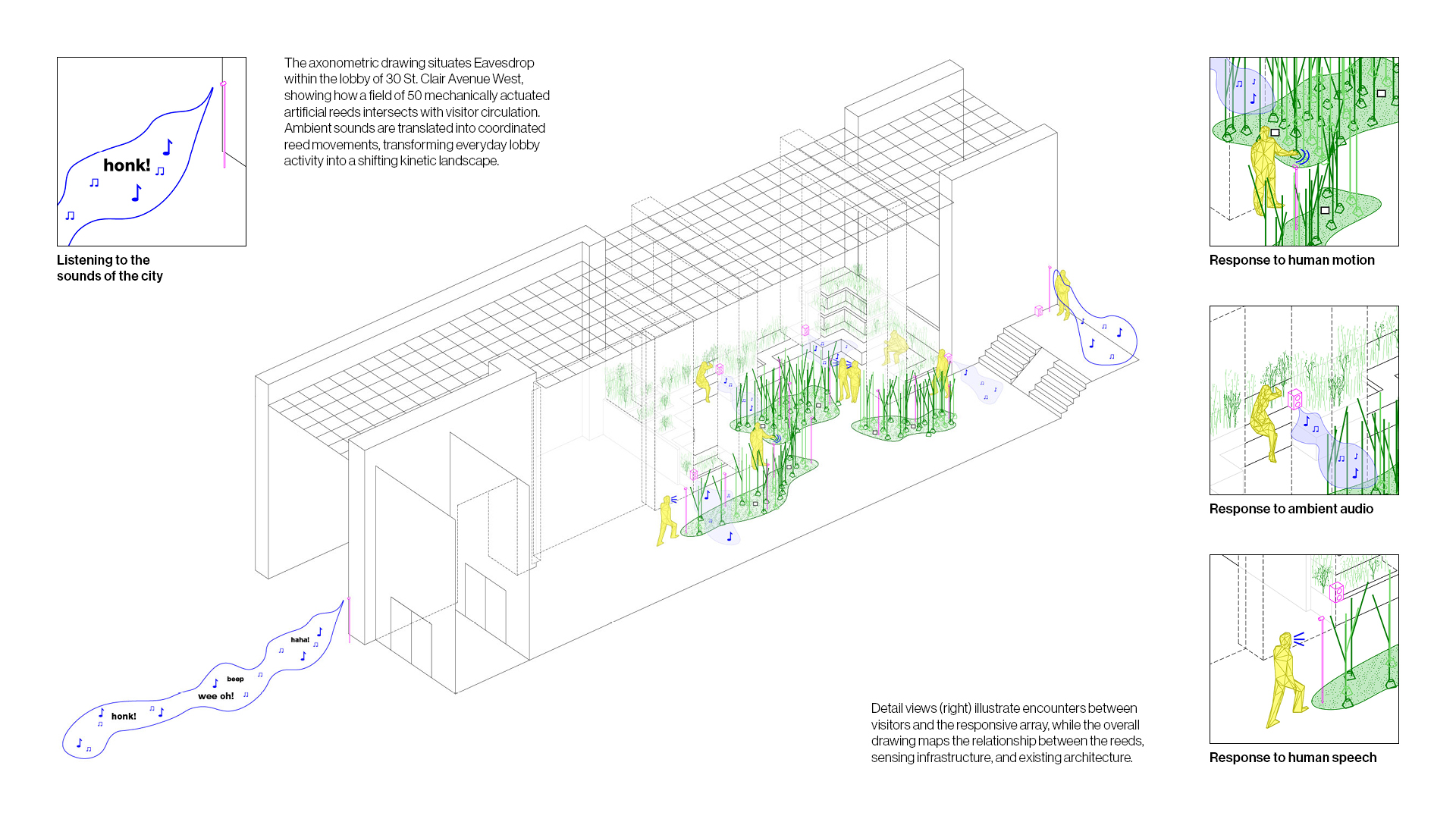
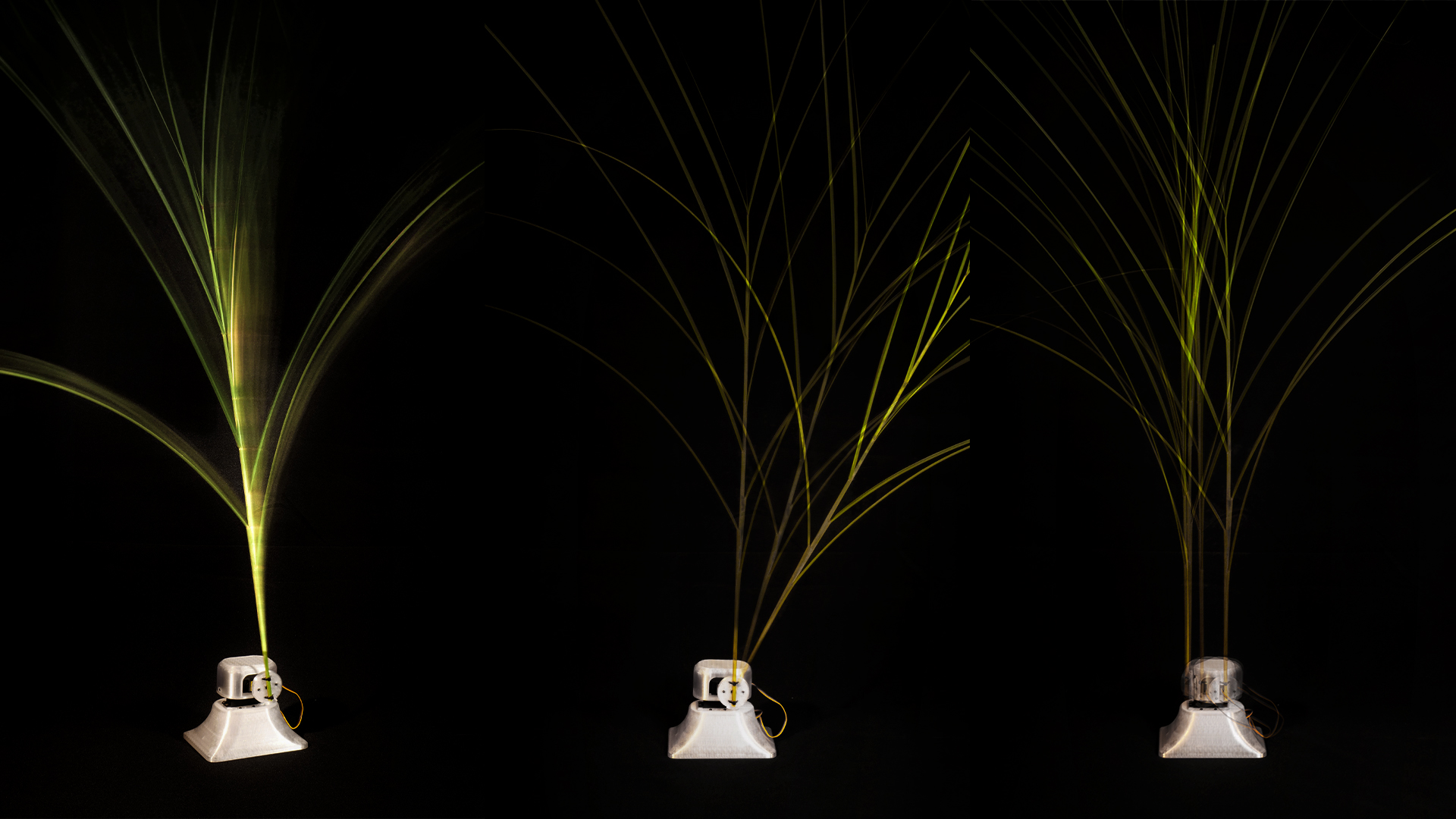
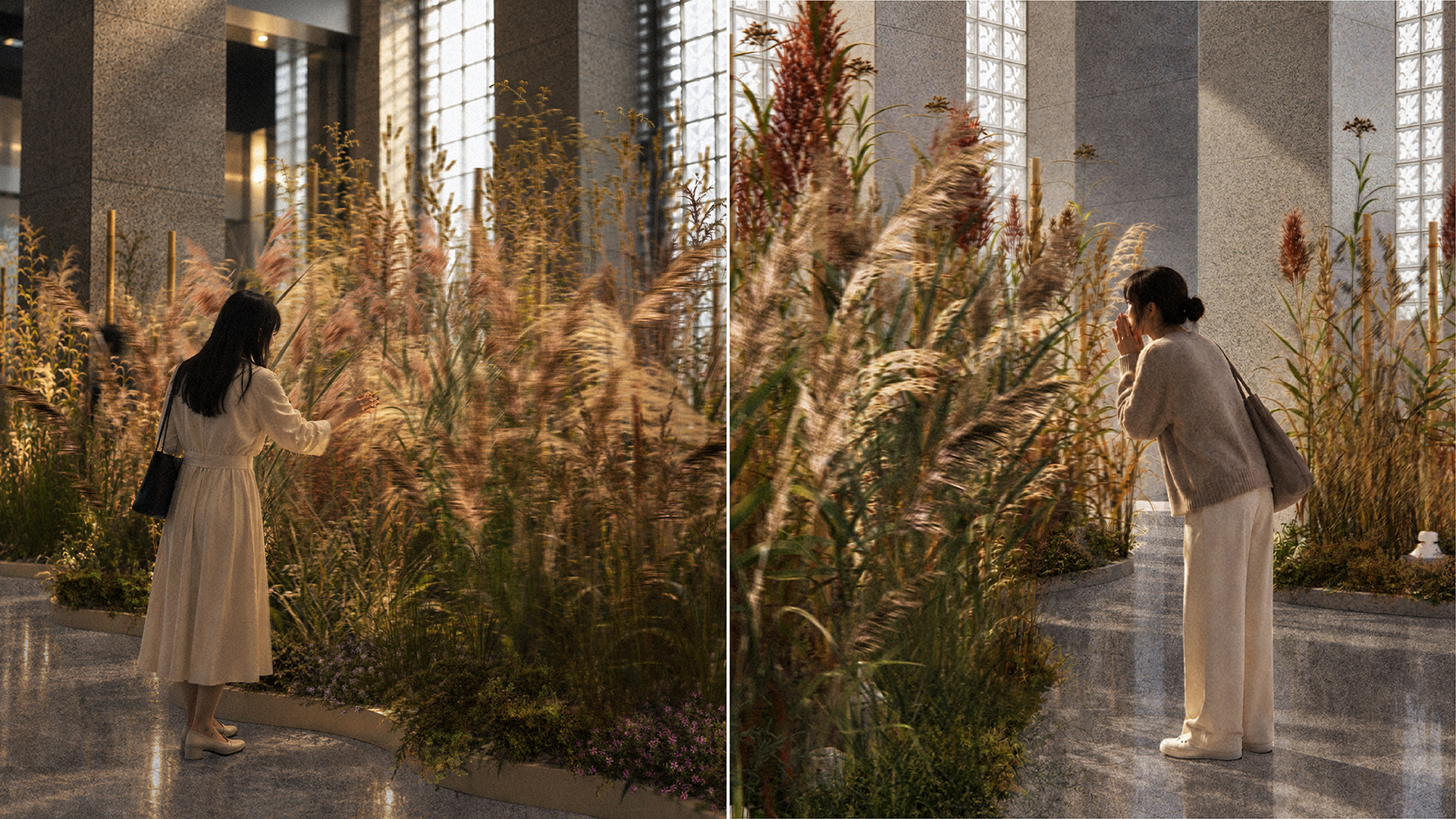
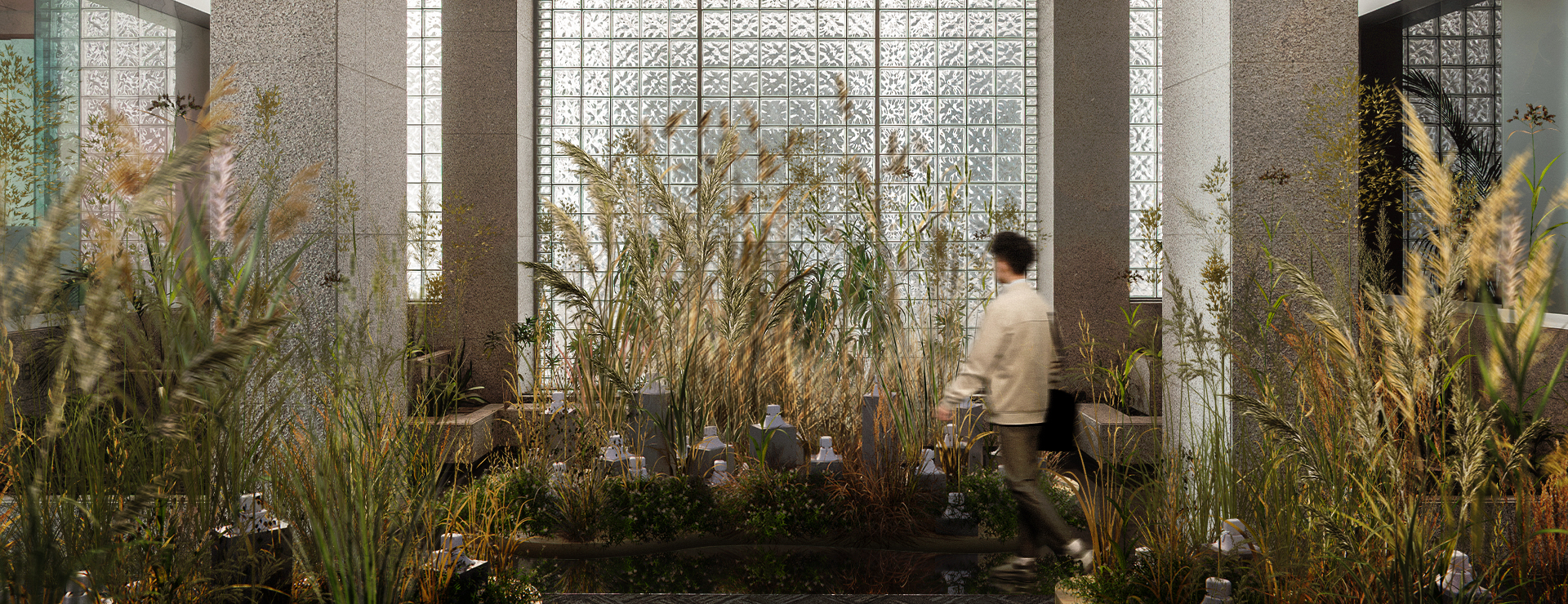
In Toronto’s ravines, where urban infrastructure intersects with wild space, plants sustain a constant dialogue by registering ephemeral environmental conditions. Plants are rooted in place, yet they reach into soil and air to gather light, water, insects, and other beings into relationships. Using sound-to-movement mapping, the installation makes this meeting of natural and human systems tangible. A dynamically responsive field of plants invites visitors to come close and whisper. Their voices join the sounds of the surrounding space, adding to an evolving soundscape. Like a breeze that becomes visible through swaying grass, the field makes subtle acoustic forces visually and tactilely perceptible.
‘Eavesdrop’ asks what we might discover when we pay attention to the unseen. It offers a moment of respite to tune in on the natural acoustic world that spills into everyday urban life, imagining a collective future shaped by both human and more-than-human voices.
Participants
Taichi Aritomo, Riling Chen, Jane Hutton, Chiun Lee, Anson Leung, Michelle Li, Teodor Mlynczyk, Katarina Richter-Lunn, Elizabeth YeohAcknowledgements
Accessibility
Who should visitors contact with questions regarding accessibility?
Is this venue accessible by wheelchair or similar mobility devices? This includes access to washrooms and all aspects of programming/events.
Can people get to the venue using accessible transit?

