Atelier Fomenta: Recipient of the 2026 DesignTO Best Product/Object Design Award
Each year, the DesignTO Awards celebrate designers whose work expands how we think about design and its role in shaping the world around us. Through our Awards Recipient Spotlight series, we’re highlighting the artists and designers behind this year’s winning projects.
What happens when a material is pushed beyond what it is expected to do?
For Atelier Fomenta, this question sits at the heart of their work and their presentation at DesignTO as part of Ensemble’s exhibition ‘Pot-au-feu’, where they introduced pieces from their DesignTO Award winning ‘Rubber Collection’ alongside the ‘Château de cartes’ table lamp and sconce.
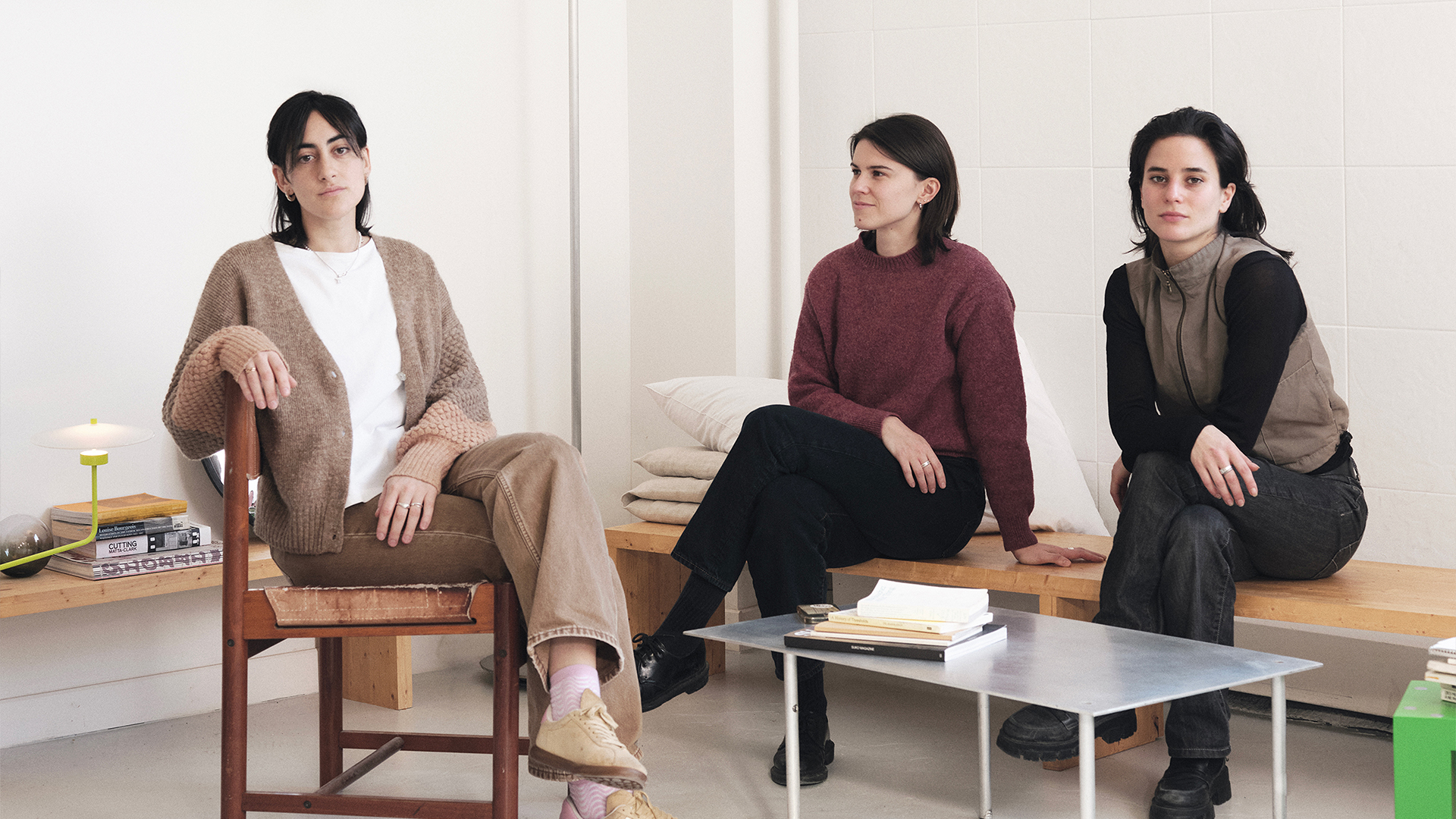
Formed by Julia Arvelo, Florence Barnabé, and Muriel Bentolila, the Montreal-based studio approaches design as a collaborative and evolving process. Their work moves between object and space, balancing function with a sense of curiosity and play. “We usually kick things off with a reference or an observation,” they explain. “Maybe a detail from a painting, a movie scene with interesting lighting, an architectural feature observed on the street or a fold in a crumpled garment.”
From there, ideas are pushed further. Objects begin to shift between categories, becoming at once functional and ironic, useful and sculptural. This tension defines much of their work, where familiarity is often reinterpreted through material and form. The studio itself emerged from a shared way of working. “The three of us met at design school through a common project,” they recall. “After working together on many projects, some sleepless nights, and lots of collaborative and enriching creative energy, we knew that starting our own studio was the way to go.”
That collaborative foundation continues to shape their practice today, not just in how they generate ideas, but in how they make. Over time, Atelier Fomenta has shifted toward a more hands-on approach, bringing production closer to the studio. “We’ve realized how important it is for us to make things ourselves,” they explain. “Being close to our projects and keeping a direct link to their evolution.”
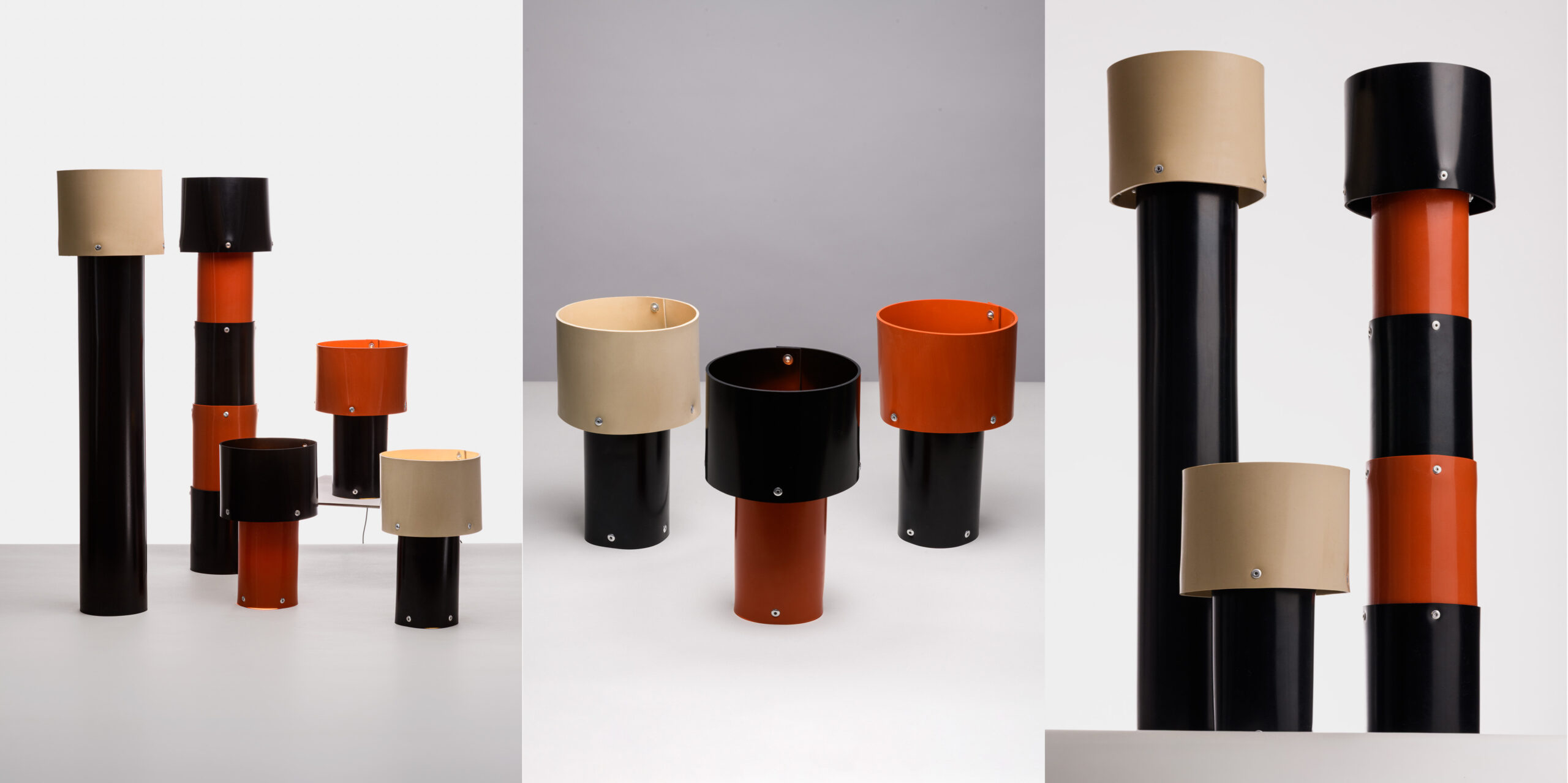
This shift has positioned their work at the intersection of industrial design and artisanal practice, where experimentation with material becomes central. That approach is particularly evident in the ‘Rubber Collection’. From the outset, the studio began to rethink rubber, not as a rigid or purely industrial material, but as something more flexible and expressive.
“We understood rubber sheet as a material akin to textile or leather,” they explain. “The way it is cut or riveted alludes to button-tufted sofas or the construction of denim garments.” Working from flat sheets, they introduced dimension and volume, exploring properties such as softness and reflectivity. This process led to a broader set of questions about structure and function. “We were interested in the idea of a flexible structure,” they say. “How something that appears soft can carry weight and stand on its own.”
That line of thinking naturally expanded into reconsidering the role of objects in domestic space. “What can a ‘library’ hold? Can rubber become a table or even a chair?” For Atelier Fomenta, these questions are not purely formal. They are also experiential. “We want people to have a tactile experience with it,” they explain. “It’s different from seeing it online or in photographs. We want people to touch it, squeeze it, sit on it.” This emphasis on physical interaction is central to how their work is understood. It resists being fully captured in images, instead inviting direct engagement.
Their influences are wide-ranging, spanning both historical and contemporary practices. “We are deeply interested in industrial materials that are raw, accessible, and expressive,” they note, pointing to design movements that challenged conventional ideas of product, luxury, and what belongs in the domestic sphere. At the same time, their creative process is shaped by everyday observation and cross-disciplinary references, from cinema and fashion to the details encountered in daily life. “All these elements contribute to our conversations at the studio and fuel our designs.”
Atelier Fomenta has been participating in DesignTO for the past three years, with each edition marking a different stage in their development. “The first time we participated, we showcased our work through the small exhibition ‘Casting Shadows’ in the studio of architect Reza Nik,” they recall. “We were just starting at the time, so to have a space like SHEEEP Gallery to transform and make our own was incredible.” Since then, the festival has become an important site for connection. “DesignTO brings together designers from across the country,” they say. “It offers us the opportunity to connect with others in the field, which is especially important to us.”
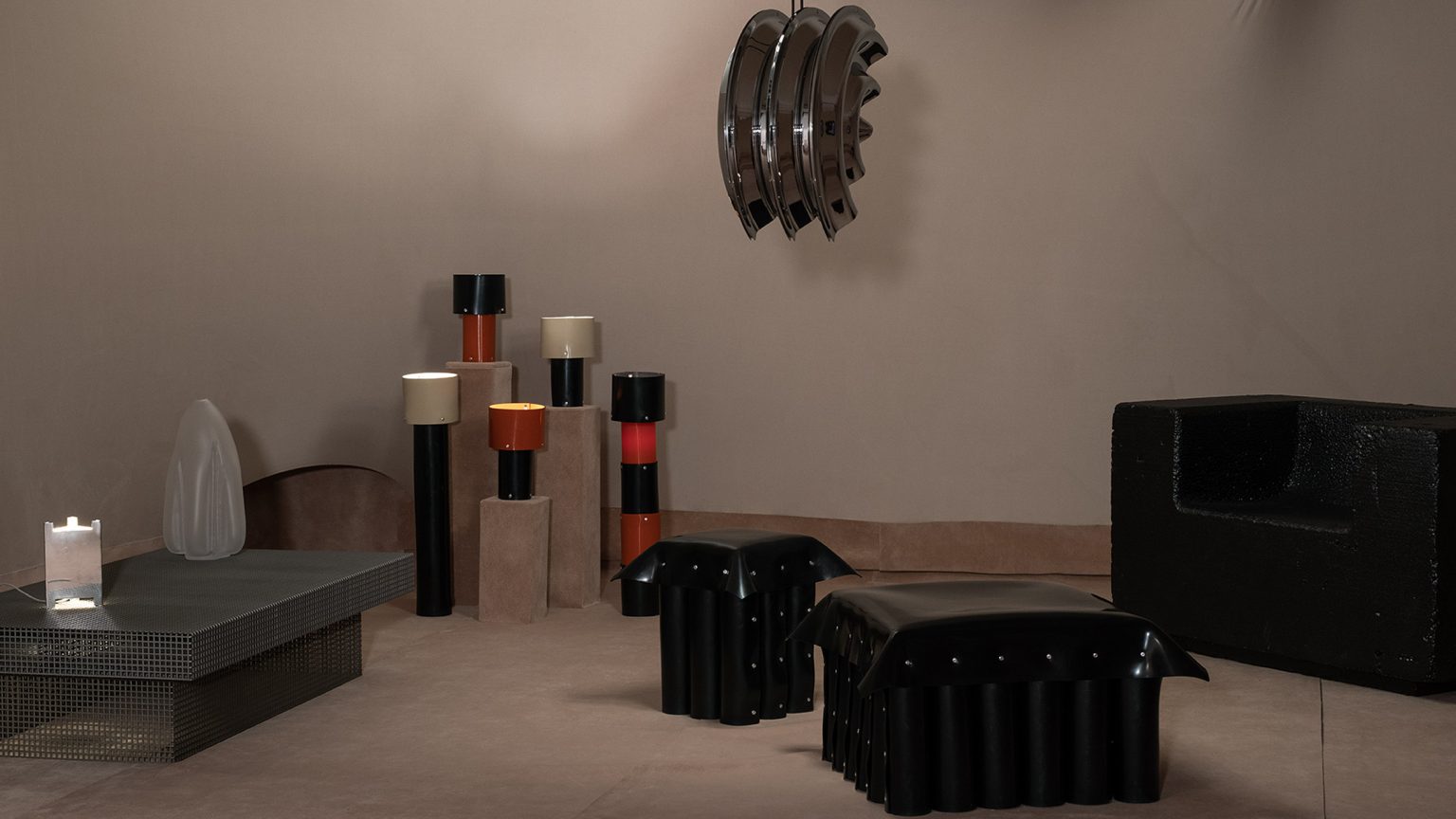
As their practice continues to evolve, so does the ‘Rubber Collection’, with new pieces already in development. “We’re expanding the collection,” they share, hinting at upcoming work to be presented during Montreal’s Design Week. In many ways, that sense of ongoing exploration defines their approach. Materials are not fixed, objects are not static, and meaning is not predetermined. Instead, their work invites us to reconsider what objects can be, how they behave, and how we experience them.