
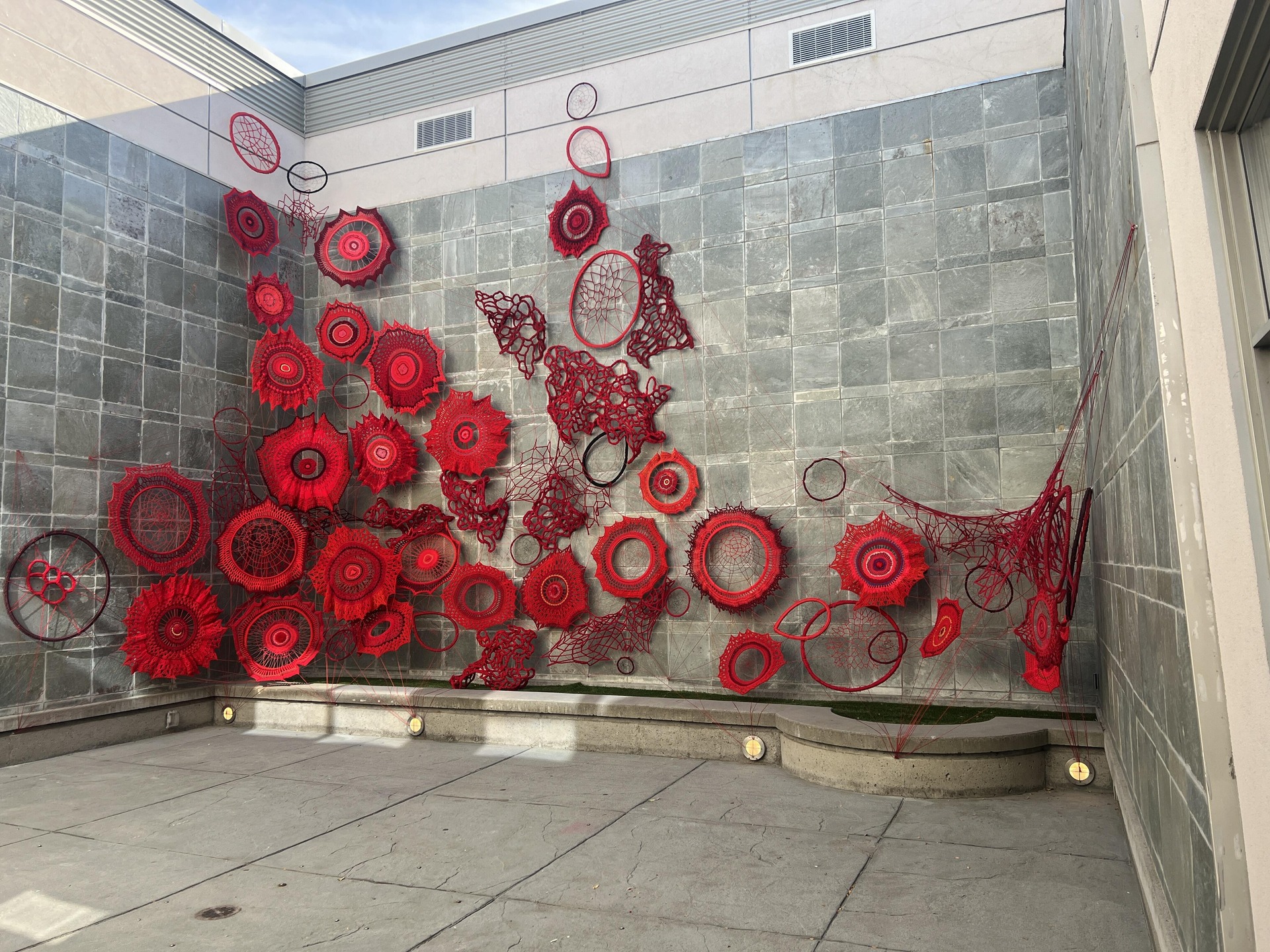
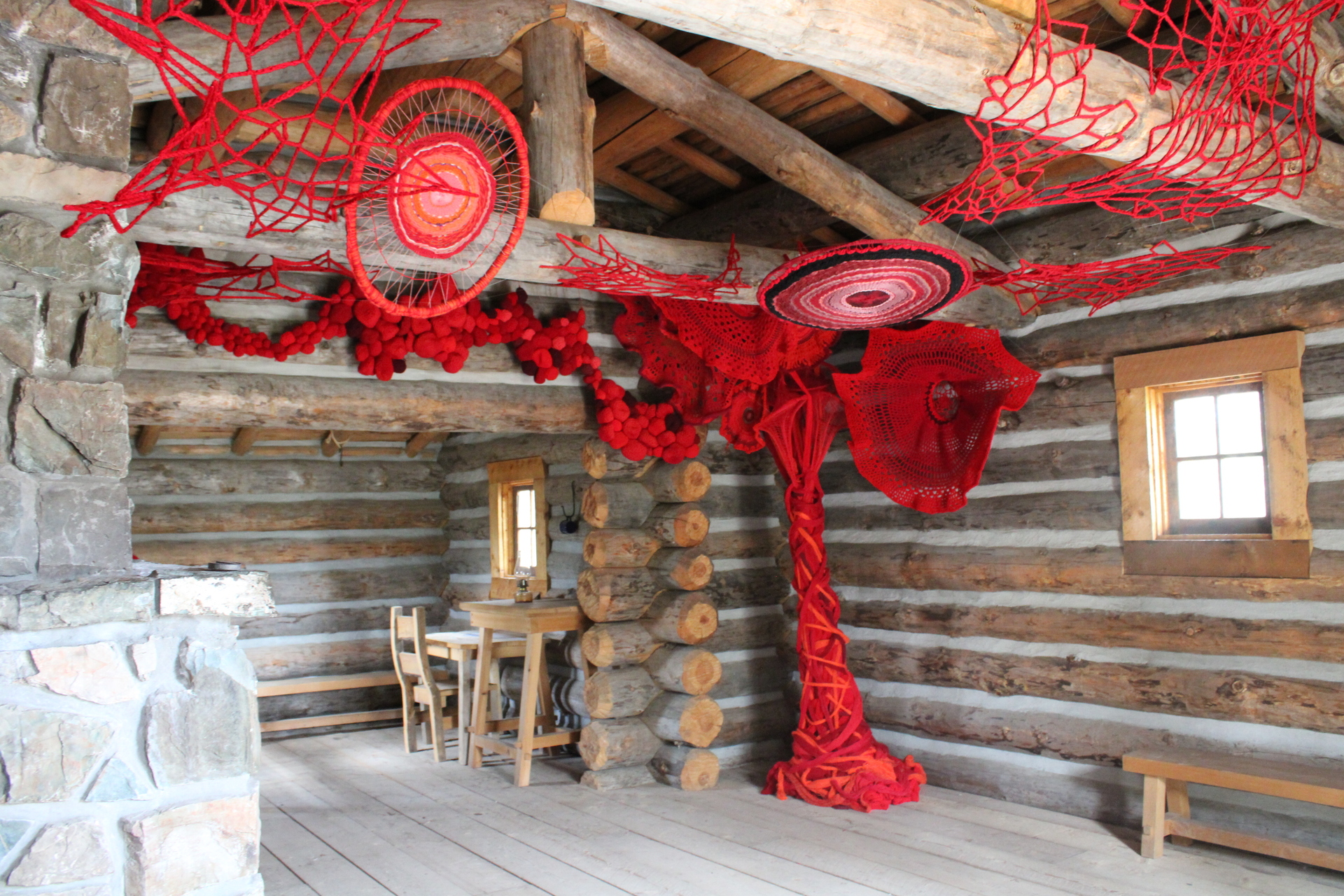
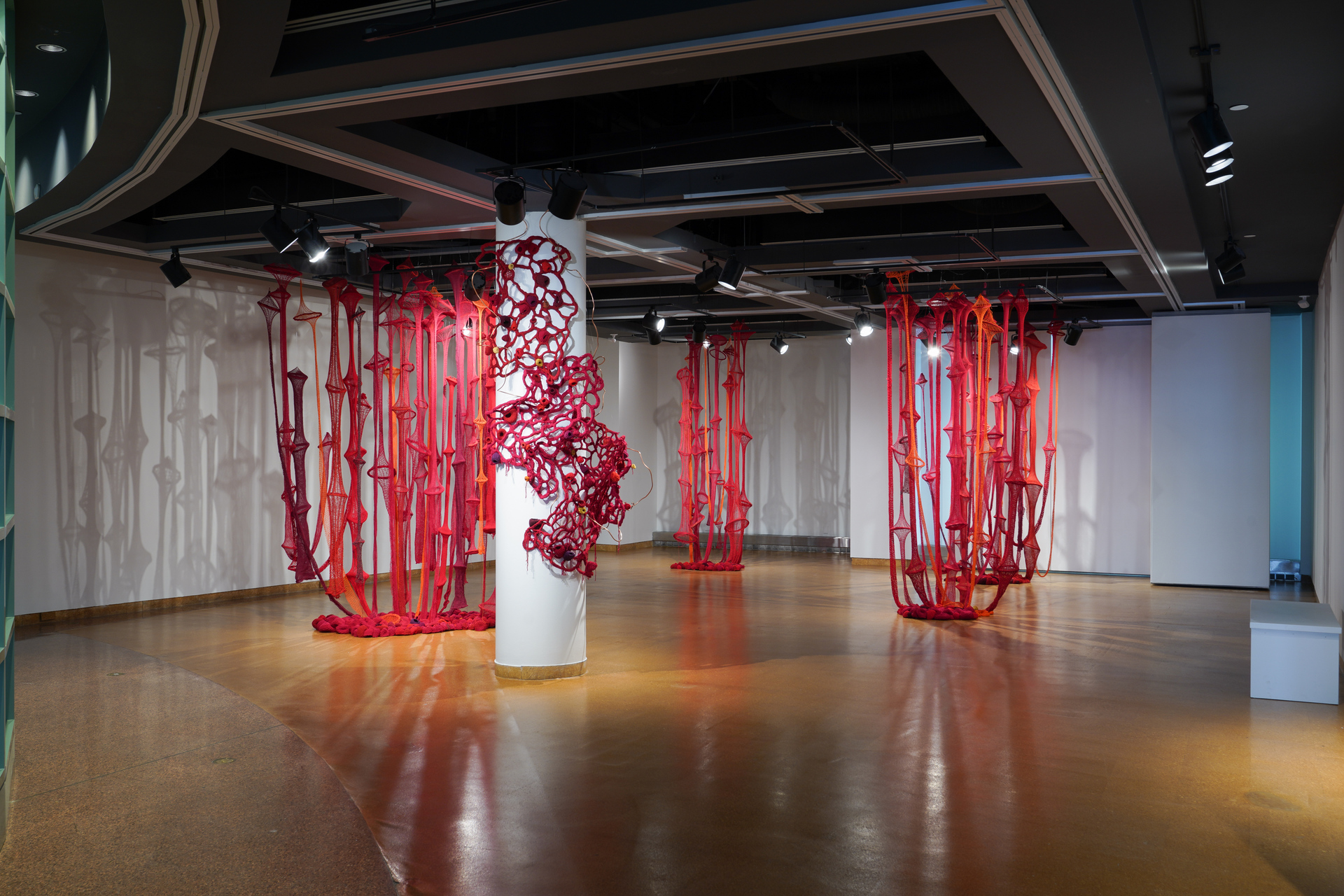
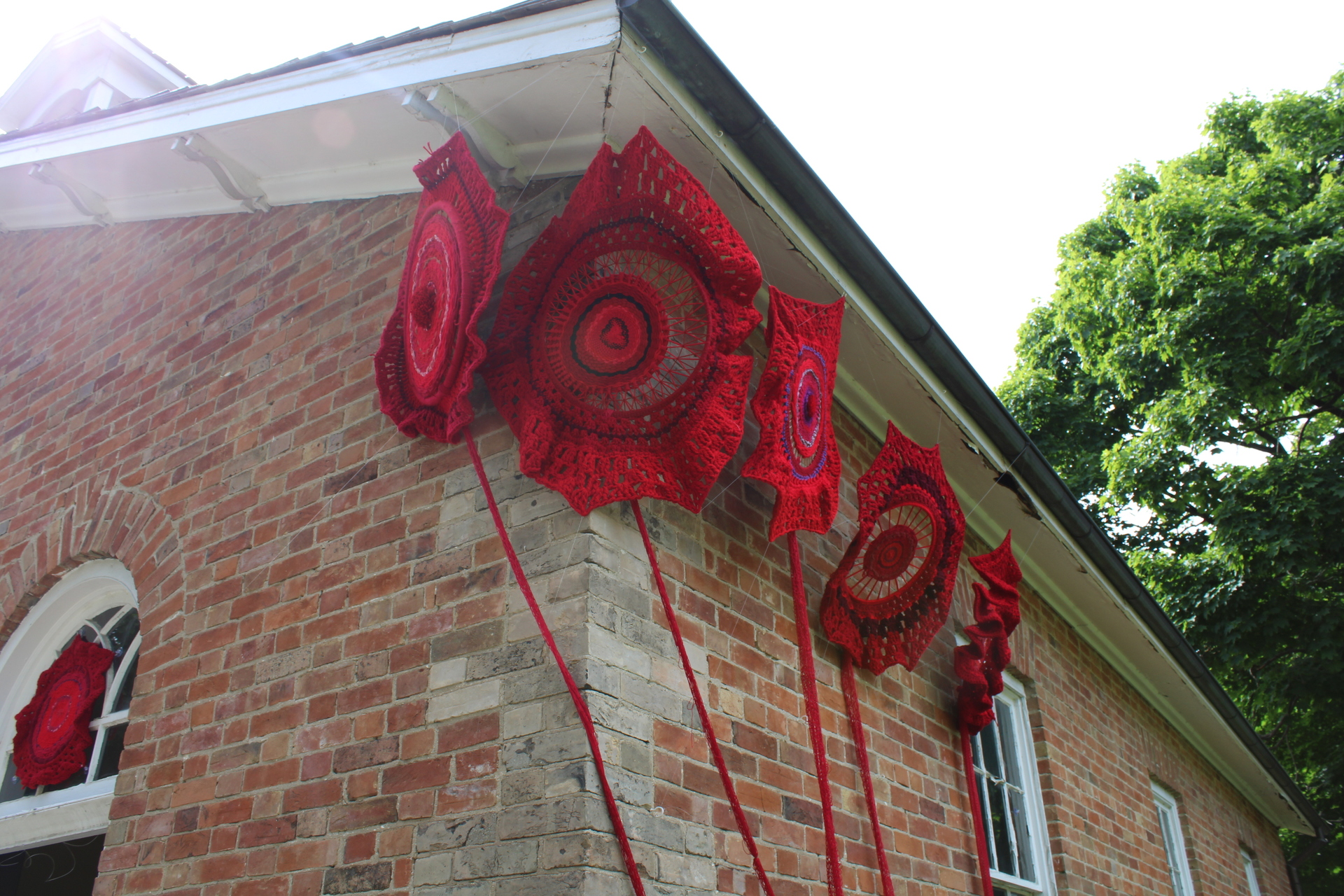
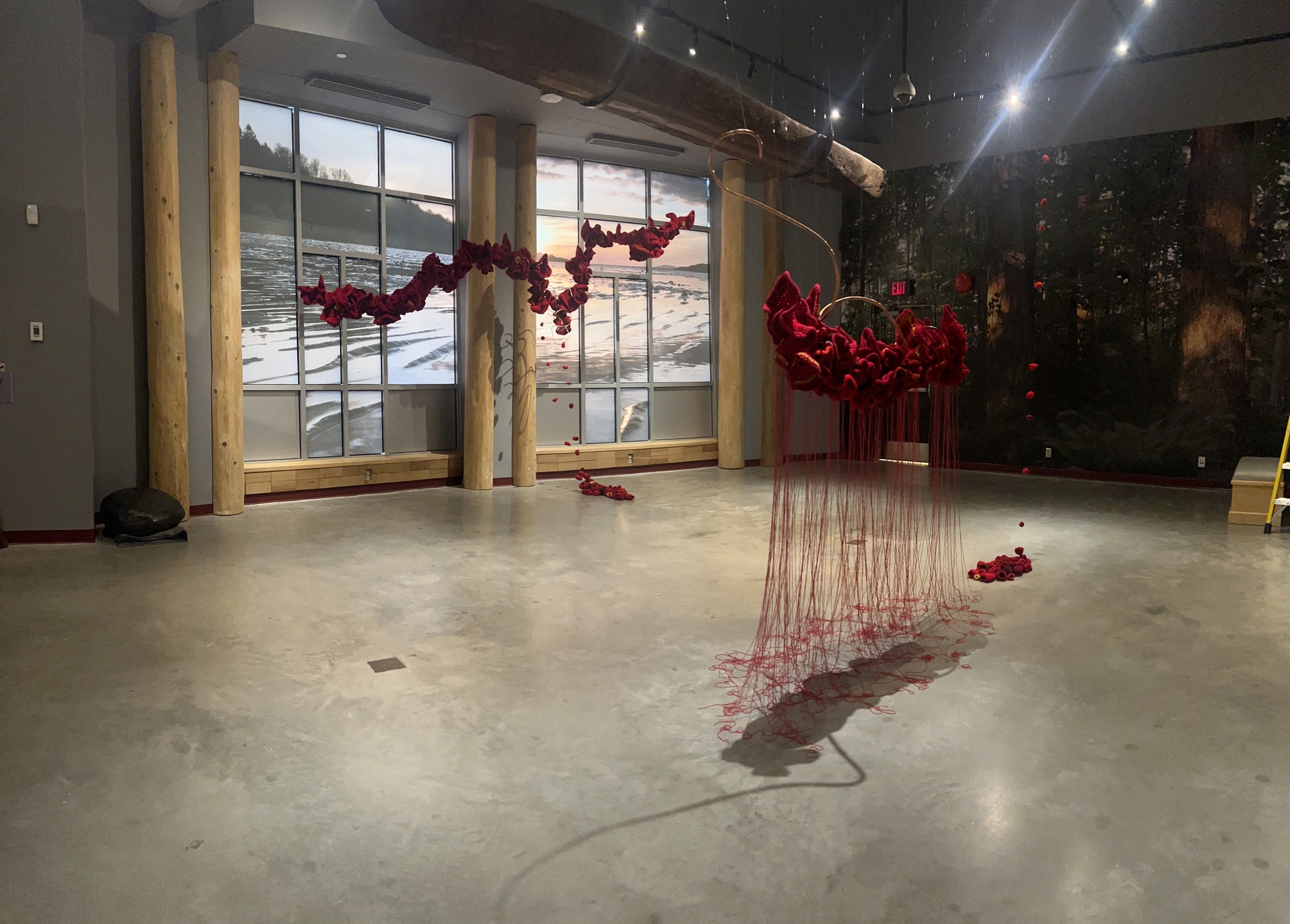
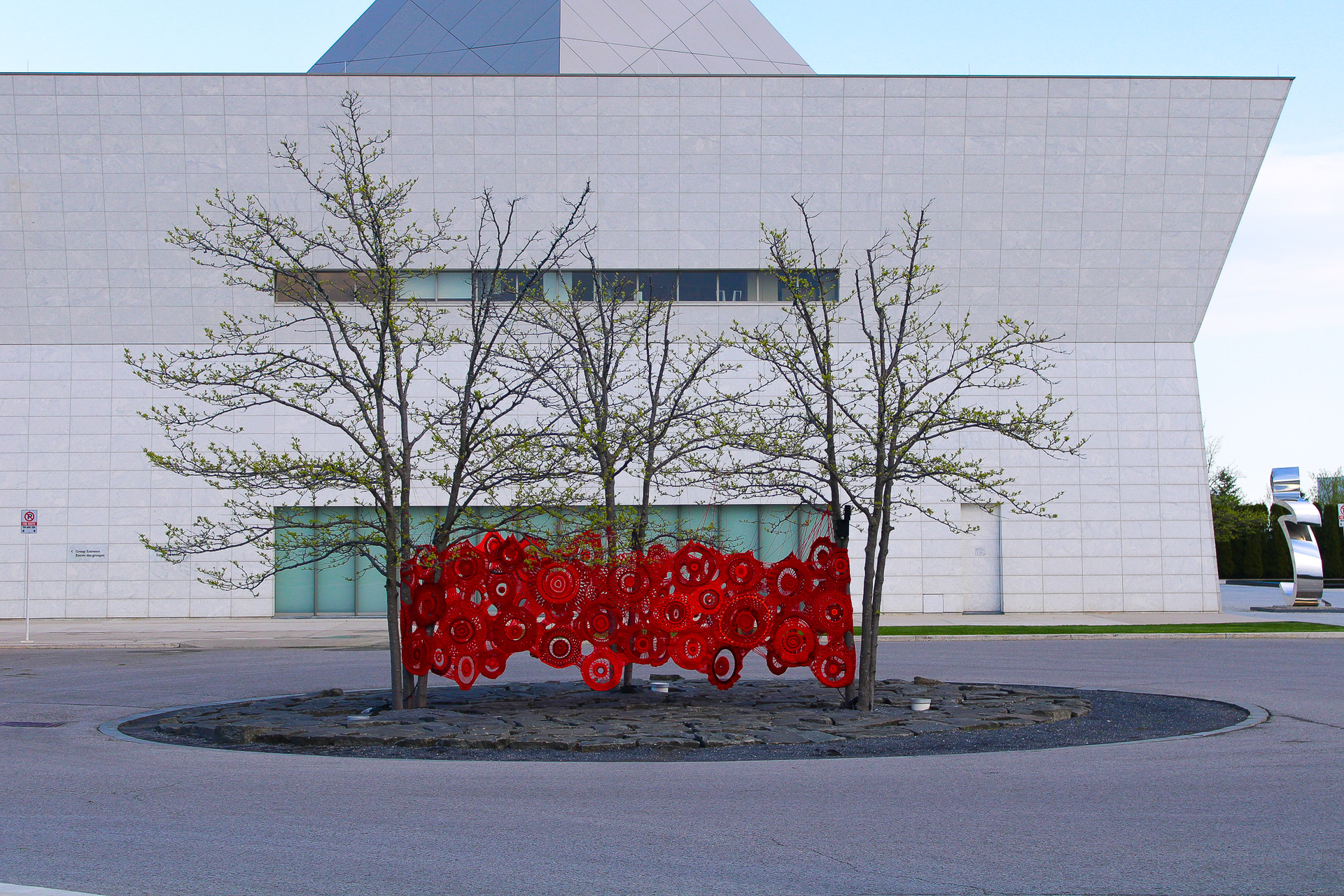

Since July 2021, artist Tracey-Mae Chambers created over 150 site-specific red fibre art installations across Canada and the United States. These works, displayed at residential school sites, museums, galleries, and public spaces, address decolonization and reconciliation by challenging colonial narratives and prompting viewers to question who tells history’s stories and holds that power.
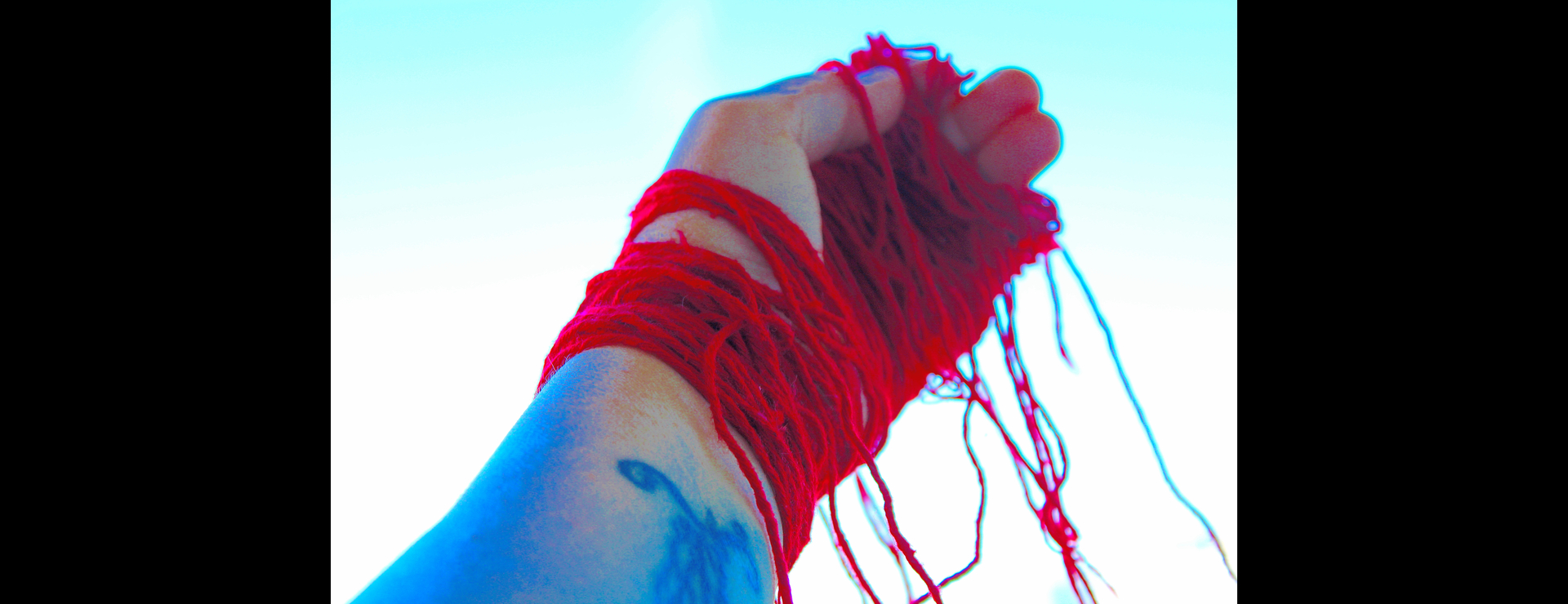
Constructed from red wool, silk, and cotton yarn using traditional techniques, the color red symbolizes both the violence and injustice against Indigenous peoples and powerful emotions like passion, anger, courage, and love, mirroring the complex dialogues of decolonization and reconciliation.
Each installation is site-specific, designed to resonate with its location’s history. After de-installation, pieces are returned to the artist, where she adds new layers of fibre, threads, and textures. These additions represent the spirit and narratives of each community, allowing the artwork to accumulate stories and energies from every place it has touched, reflecting the dynamic nature of reconciliation.
Chambers’ creative process involves deep engagement with each site, with staff providing details that inform her fibre creations. This collaborative approach ensures the work is rooted in its environment, mirroring the ongoing journey of understanding and healing.
The large weavings in this installation have been created using threads that have become too small after their travels to use in larger pieces but their journey continues in the form of weavings that have been made specifically for The Yonge + St. Clair BIA for DesignTO.
As a Métis woman, Chambers’ heritage informs her goal to bridge gaps between settlers and First Nations, Métis, and Inuit peoples. Her art is designed to be approachable and non-confrontational, inviting dialogue and fostering empathy, understanding, and collective healing.
Participants
Tracey-Mae ChambersAcknowledgements
Accessibility
Who should visitors contact with questions regarding accessibility?
Is this venue accessible by wheelchair or similar mobility devices? This includes access to washrooms and all aspects of programming/events.
Are designated parking spots for persons with disabilities close to the entrance of the building?
Can people get to the venue using accessible transit?

