Recipient of the Best in Festival: Window Installation Award, 2026 DesignTO Awards
Each year, the DesignTO Awards celebrate designers whose work expands how we think about design and its role in shaping the world around us. Through our Awards Recipient Spotlight series, we’re highlighting the artists and designers behind this year’s winning projects.
What can a moment of pause reveal in the middle of a city?
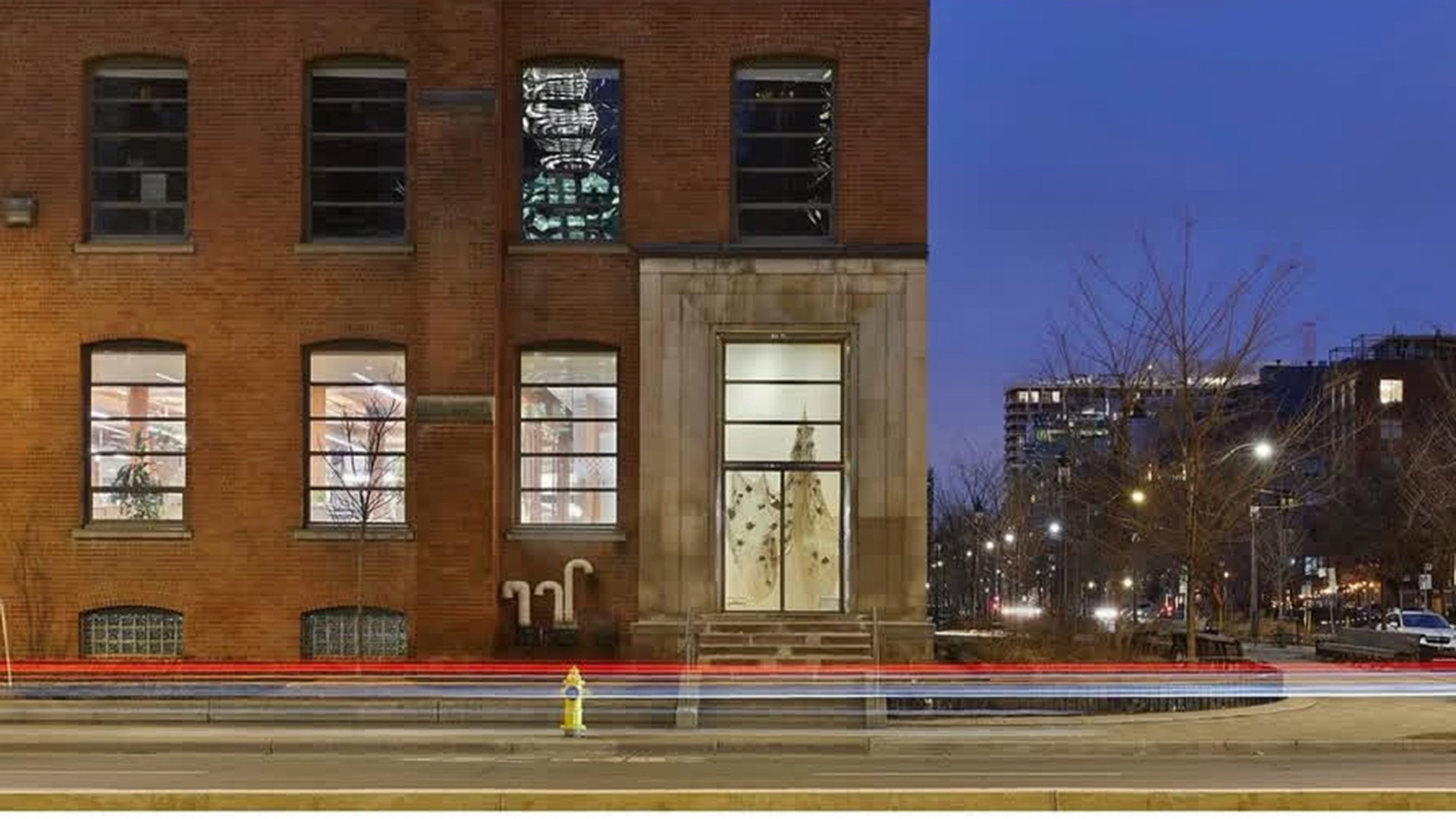
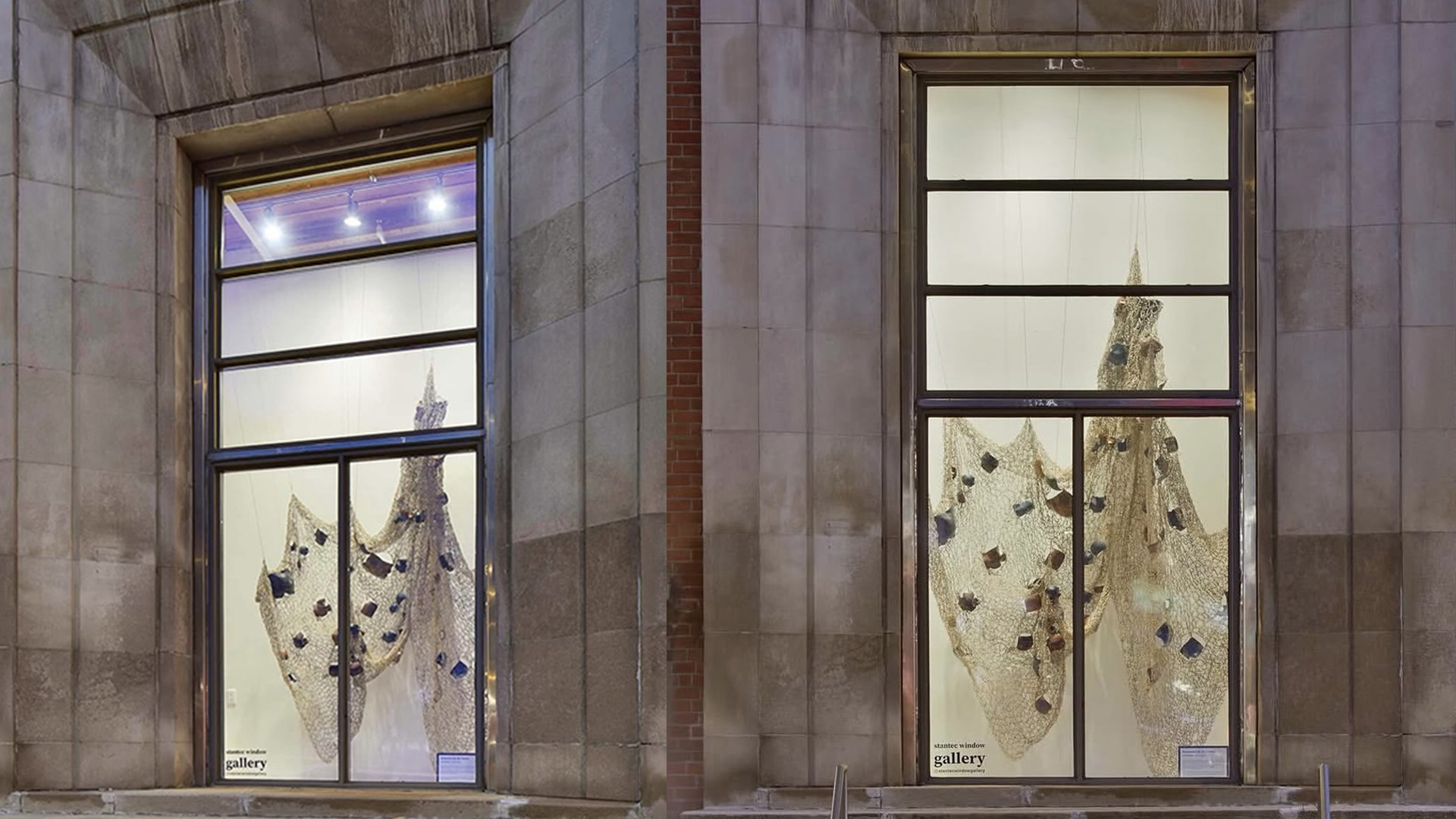
For multimedia artist Yana Rzayeva, this question guided the window installation ‘Remnants for the Future’, presented in the Stantec Window Gallery as part of the 2026 DesignTO Festival. Visible from the street, the Best in Festival work invites passersby to slow down, look closely, and encounter materials that carry both history and transformation. “I hoped viewers would experience a moment of pause and reflection,” she explains. “Because the installation is visible from the street, I was interested in how it might interrupt the rhythm of the city.”
Composed of hand-knotted fibers and hammered copper forms, the installation draws attention to texture, labor, and the quiet presence of material. Rather than demanding attention, it creates a subtle shift in perception, offering a space where memory and material coexist. Rzayeva’s practice moves between textiles, metal, and mixed media, grounded in an ongoing exploration of diaspora, cultural memory, and inherited craft traditions. “I am a multimedia artist whose practice combines textiles, metal, and mixed media,” she says.
“My work draws inspiration from traditional craft practices from my ancestral home in Azerbaijan while situating them within contemporary art and design contexts.” Her process is deeply material-driven. Ideas often emerge through direct engagement, shaped by the physical properties of the materials themselves. “I’m particularly drawn to materials that carry history, texture, and the trace of human labor,” she explains. “Often my ideas emerge directly from working with these materials and discovering how they can be transformed.”
Through techniques such as knotting, dyeing, hammering, and layering, materials become a way of holding and translating memory. Her path into this way of working developed gradually, rooted in an intuitive relationship to making. “It was not so much a single defining moment,” she reflects. “It was a growing realization that making was how I understood the world.”
As she began working with textiles and craft-based processes, those materials revealed their potential as storytellers, connecting personal history with broader cultural narratives. Over time, her practice has evolved significantly, shifting from painting toward more sculptural and installation-based work. “I began primarily as a painter,” she explains, “but over time my work expanded into textiles, fibers, natural dyes, and metals.”
This transition allowed her to engage more directly with process and labor, embracing techniques that require repetition, time, and physical engagement. “Today my work is much more sculptural and installation-oriented,” she says. “I focus on how materials can be transformed and combined to explore themes of memory, cultural inheritance, and identity.”
Rzayeva’s influences reflect a similar engagement with material and transformation. She points to artists such as Faig Ahmed, El Anatsui, Ruth Asawa, and Anselm Kiefer, whose work reimagines traditional practices through contemporary forms. Their ability to create structures that are both monumental and delicate continues to inform her thinking around scale and process.
This year marked her first time participating in DesignTO, an experience that allowed her to bring her work into a public-facing context. “I was interested in showing my work at the DesignTO Festival because it provides a unique platform where art, design, craft, and material experimentation intersect,” she says. For Rzayeva, the visibility of the festival plays an important role in expanding access and dialogue. “DesignTO makes design accessible and visible throughout the city,” she explains. “It connects local practitioners with an international network of artists and designers.”
In ‘Remnants for the Future’, those ideas come together through a quiet but deliberate gesture. Materials that carry history are placed within a contemporary urban setting, inviting reflection on what is carried forward and how it continues to evolve. It is a work that does not ask for attention, but rewards it, offering a moment to pause and consider the traces we inherit and the forms they take over time.